
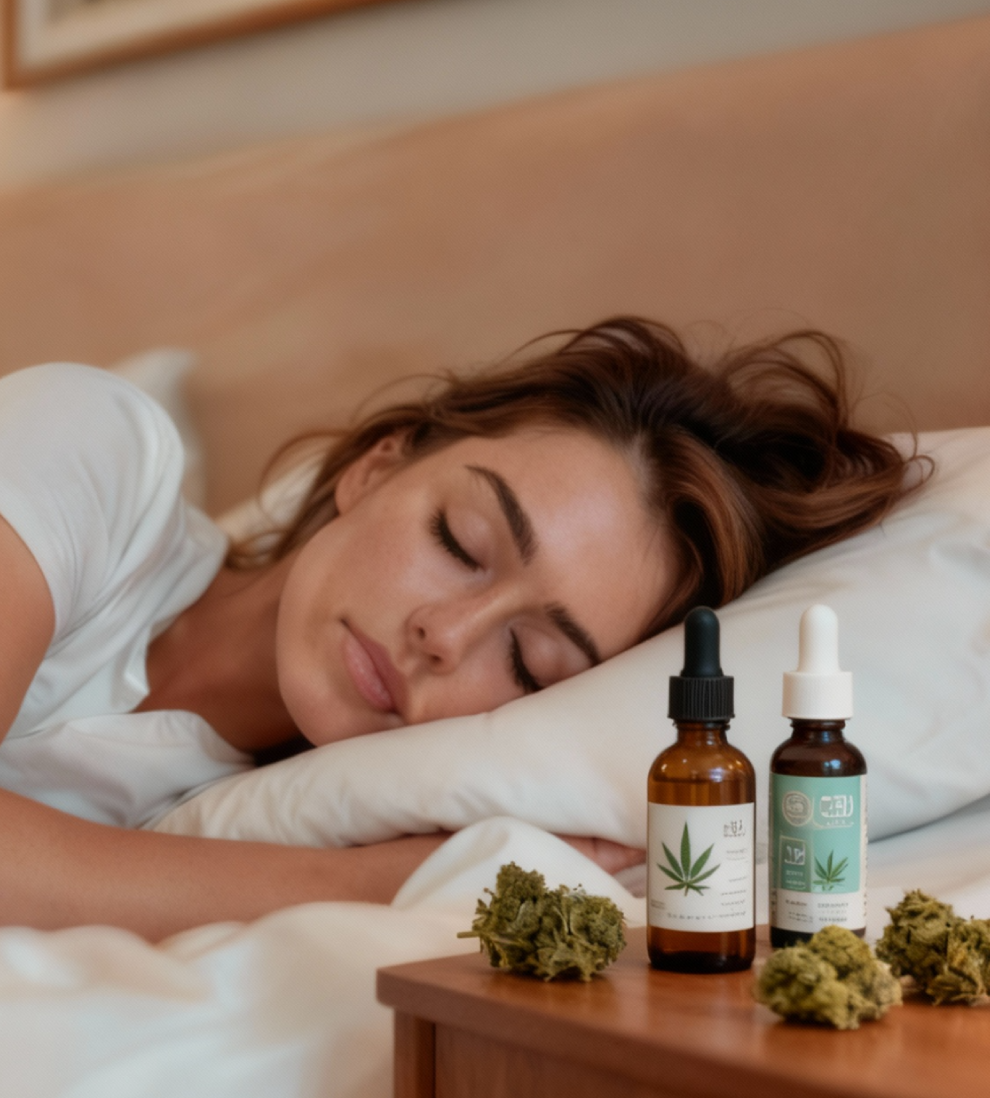
In today’s fast-paced world, quality sleep has become increasingly elusive, leaving many searching for natural solutions to achieve restful nights. Among the growing range of remedies, cannabis and its derivatives have emerged as promising aids for better sleep. With compounds like CBD, THC, and CBN influencing relaxation, pain relief, and anxiety reduction, cannabis-based products are gaining attention for their potential to improve sleep quality. However, understanding how these compounds work-and which products are most effective-is key to using them safely and successfully. This blog explores the connection between cannabis and sleep, highlighting the best products for truly restorative rest.
Understanding the relationship between cannabis and sleep
Sleep is a complex biological process involving several stages-light, deep (NREM), and REM-regulated by multiple neurotransmitters. When people struggle to fall or stay asleep, they often seek natural alternatives beyond standard sleep hygiene. Increasingly, many are turning to cannabis tinctures Tarrytown and its derivatives for support. Cannabis sativa contains compounds like THC, CBD, and CBN, which interact with the body’s endocannabinoid system to influence relaxation, pain, and anxiety-key factors in sleep quality.
Studies suggest cannabinoids may promote sedation by increasing adenosine and reducing brain arousal, helping some people sleep better. However, evidence remains mixed; while many report subjective improvement, research shows inconsistent effects on sleep stages. Moreover, heavy or prolonged use can cause tolerance or withdrawal-related sleep issues. In short, cannabis-derived products may benefit certain individuals, particularly those with pain or anxiety, but they are not a guaranteed solution and should be used cautiously and responsibly.
What kinds of products people use for sleep
When considering cannabis and sleep, people actually choose from a range of product types-not just smoking flower. Each mode has trade-offs in onset time, duration, potency, side-effects and legal/health considerations.
Oils / tinctures / sublingual drops
These are liquid extracts (often CBD, sometimes combined with a low dose of THC) taken under the tongue or swallowed. Advantages: more controlled dose, slower onset (30-60 minutes) but longer duration, less lung-impact than smoking. Some clinical trials have used CBD/THC oil for insomnia.
Edibles / capsules
These are swallowed forms (gummies, tablets) that take longer to kick in (often 1-2 hours) but last longer (6-8+ hours). Useful if you’re trying to stay asleep through the night. However, longer duration means greater risk of morning grogginess or interference with daytime alertness.
Vaporised / smoked flower
This is traditional smoking or vaping of cannabis flower or concentrate. Onset is rapid (minutes), which can be helpful if you have trouble falling asleep. But the effect may not last as long, and frequent use can affect lung health and lead to tolerance/withdrawal effects.
Novel cannabinoids / blends
Emerging research is looking at compounds beyond THC and CBD. For example, CBN has shown promise in animal models for increasing both non-REM and REM sleep. Some products marketed as “night time blends” combine CBD + CBN + small THC + calming terpenes like myrcene or linalool.
Full spectrum vs isolate
“Full spectrum” products contain many cannabinoids, terpenes and other plant compounds (the so-called “entourage effect”). Isolates contain just one cannabinoid (e.g., pure CBD). Some users believe full spectrum offers better effects for sleep, but also carry higher cannabinoid/THC content and regulatory/legal complexity.
Best practice guidelines for choosing and using cannabis-derived products for sleep
If you’re considering using a cannabis-derived product to help your sleep, here are some guidelines and tips to help you choose safer and potentially more effective options.
Check legal/regulatory status: In India (and many other countries) cannabis and cannabinoids are regulated. Make sure the product is legal where you are. Importing or using unapproved cannabinoids can carry legal risks.
Understand the cannabinoid profile:
- CBD alone may help with anxiety and aid sleep initiation, but effects are mixed.
- Low-dose THC (e.g., <10 mg) may help some people fall asleep but higher doses may increase wakefulness, reduce REM and lead to next-day grogginess.
- CBN is promising but human trials are still very limited.
Start low, go slow: Begin with a small dose (for example, a low-THC oil or CBD tincture) and monitor effects. Increase only if needed and tolerated. This helps avoid oversedation or tolerance.
Time your dose carefully:
- For falling asleep issues only: Take 30-60 minutes before bed.
- For staying asleep: Consider longer-acting formulations (e.g., edibles) or a small “top-up” mid-night (only if safe/legal).
- Avoid large doses late at night if you need to wake up early (risk of grogginess).
Consider the delivery form: If you have lung concerns, prefer oral forms (oils/edibles) over inhalation. If you want fast onset but shorter duration, inhalation may be used-but monitor carefully.
Support with good sleep hygiene: Using cannabis products is not a substitute for the basics: consistent bedtime, dark & cool room, no screens before bed, avoiding caffeine/alcohol late in day, managing noise/stress. Cannabis might be a tool, not the entire solution.
Monitor other medications and health conditions: Cannabinoids interact with other drugs (for example SSRIs, sedatives, opioids). Also, if you have underlying conditions like sleep apnea, restless legs, mood disorders, cannabis may mask but not treat the root cause. For instance, one review warned: “cannabis products have minimal to no effects on sleep disorders and may have deleterious effects in some individuals.”
Watch for signs of dependence or tolerance: Regular nightly use over time may lead to loss of effect, increasing dose requirements, difficulty sleeping without it or disturbed sleep if you stop. Some young-adult surveys show increased long-term problems.
Choosing “best products” for restful nights – what to look for
Here’s a checklist of what to look for when selecting products, framed in a way that helps you identify “better” options:
- Clear labelling – Look for products that list exact cannabinoid content (e.g., 25 mg CBD + 2 mg THC).
- Third-party testing – Independent lab reports for potency, purity (no heavy metals, pesticides, microbial contaminants).
- Low THC (unless you know you tolerate it) – If you’re new to cannabis for sleep, a high-THC edibles near me product may produce undesirable effects (anxiety, wakefulness, impaired next-day).
- Balanced cannabinoid/terpene profile – Some sleep-targeted products include CBD + CBN + calming terpenes (e.g., myrcene, linalool) – though evidence is still emerging.
- Delivery form matched to your need – Oil/tincture for moderate onset, edibles for longer overnight effect, inhalation for rapid onset but shorter duration.
- Moderate dosing – Many studies used modest doses. For instance a crossover trial found oil with 10 mg/ml THC + 15 mg/ml CBD improved sleep in insomnia patients when titrated from 0.2-1.5 ml/day.
- User experiences & reviews – but cautiously – Anecdotal feedback can help but beware bias.
- Withdrawal considerations – Choose a product that if you stop, you aren’t likely to be left with worsened insomnia. Some research shows withdrawal from cannabis is associated with reduced total sleep and prolonged sleep onset.
Conclusion
Cannabis and its derivatives hold real promise as natural aids for improving sleep quality-particularly for those struggling with pain, anxiety, or stress-related insomnia. However, they are not a universal solution. The effectiveness of cannabis for sleep depends heavily on the product type, dosage, timing, and individual response. Responsible use, paired with healthy sleep practices and medical guidance, is essential to avoid potential downsides such as dependence or grogginess. By approaching cannabis mindfully and prioritizing overall sleep hygiene, individuals can explore its potential benefits while maintaining balance, safety, and sustainable rest over the long term.